

Charro Photo Shoot: Behind the Lasso in Compostela, Mexico
Charros have long fascinated me. They’re a distinguished part of Mexican culture with a fantastic history. This shoot, though, was about something simpler: a real charro, a lasso, and the open country around Compostela. It’s where my print Charro #1 comes from.
Watch the shoot: a minute and a half behind the scenes with a real Mexican charro in the hills around Compostela, from the fence line to the last light of the day.
Charro country: the drive to Compostela
Compostela is a small Mexican town in the foothills of the Sierra Madre mountains. I love driving into the parched grasslands that lead up to it. It’s still, in a very real sense, charro country. Once you leave the last big town behind, the roads narrow and eventually turn to dirt, and then horses start replacing cars. It’s not just the speed you travel at that slows down; the pace of life does too. Coming here always feels like a welcome break from reality.
For this shoot we wanted simple but still cinematic outdoor shots. As soon as I saw Alfredo, our charro, climb out of his car, I knew it was going to be a great photoshoot. Working with someone with such great features is a photographer’s dream, and I made sure to take full advantage.
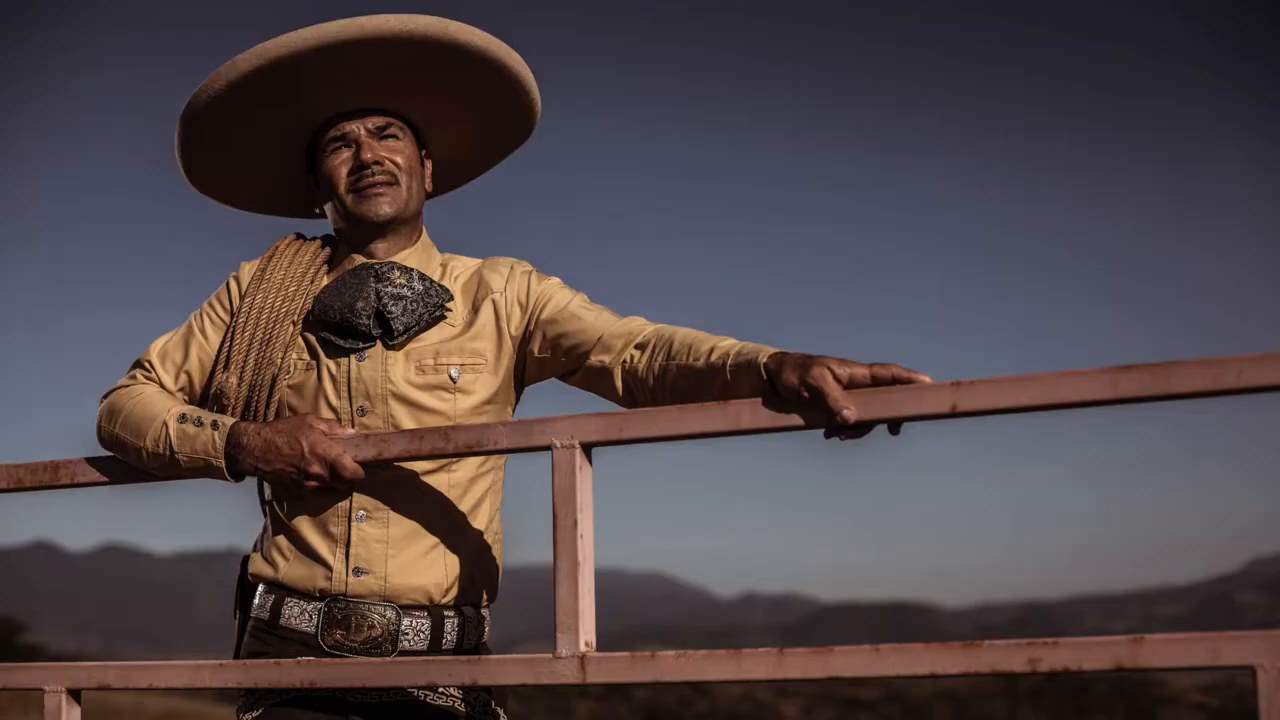
Behind the scenes: no horse, new plan
The shoot was almost derailed before it started. Alfredo turned up without his horse. There’d been a breakdown in communication (my Spanish was to blame). No matter: I always have far too many ideas for one shoot, so we focused on the ones that didn’t need a horse. If there’s a lesson there, it’s to always have a contingency plan. Things go wrong, but if you’re prepared, you’ll be fine.
Preparation also meant homework. We studied cowboy and masculine poses on the drive over. Every time you change subject, you need to learn about that world: not just the history, but the aesthetics and mannerisms of the people in it. That’s what makes the photos feel authentic.
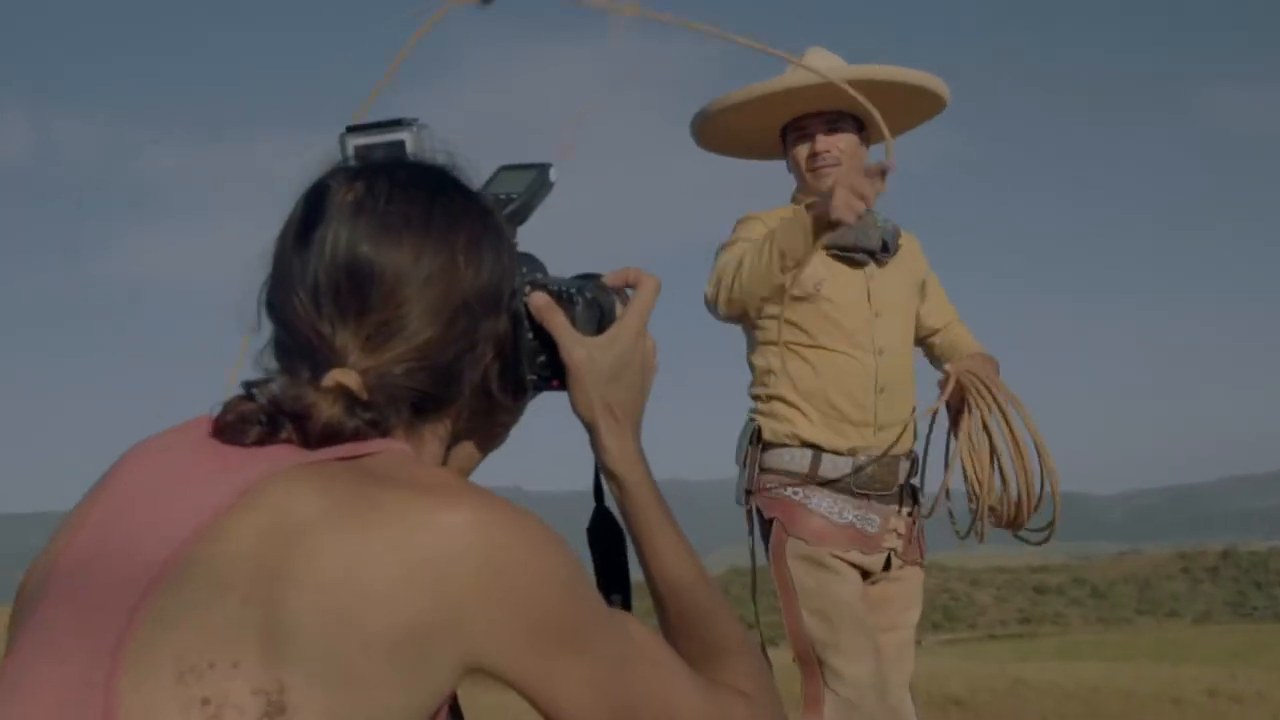
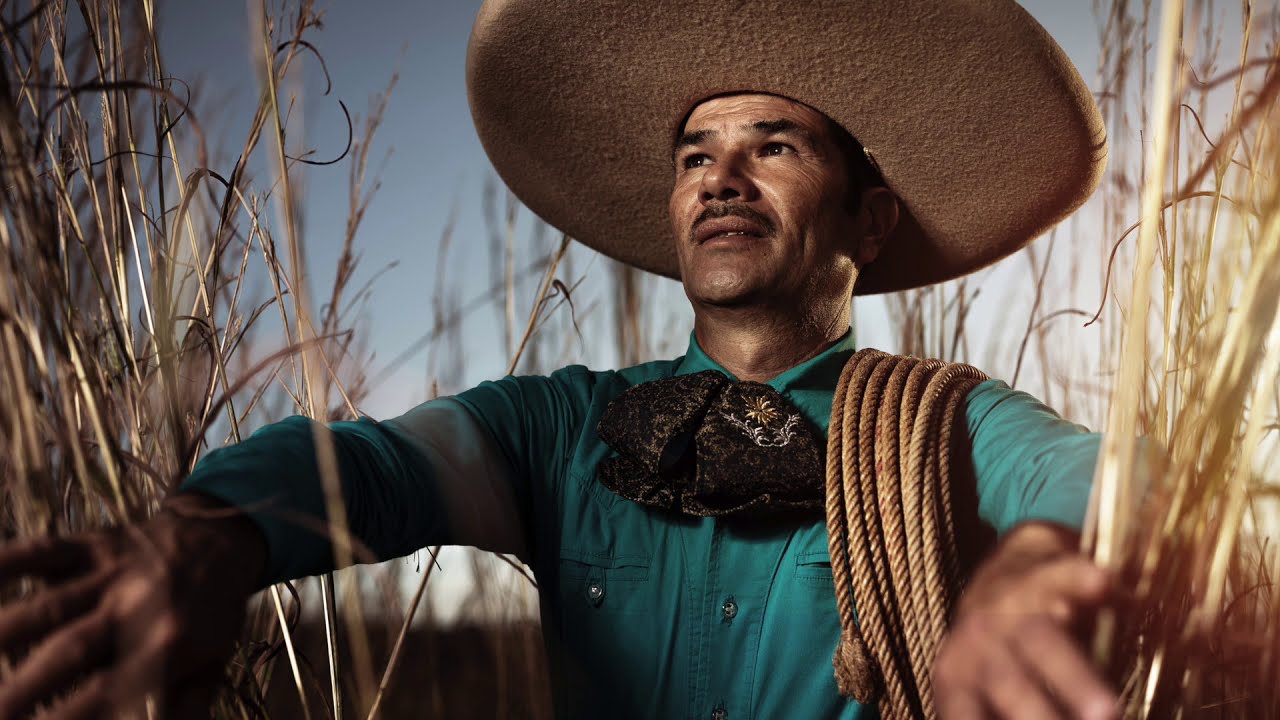
Then there was the tall grass. We’d been shooting for about an hour when I moved us further into a field of tall grasses. I was, as usual, totally swept up in the moment and focused on my viewfinder. Our charro tripped over something in the cracked earth, swept the grass aside, and bent down to look. We were hovering over him when he told us what a big scorpion’s nest he’d just kicked. There was a pause, and then we all looked down at my bare feet. My heart was racing as I walked back to the car for some shoes. Being born in the UK, a country without a single native poisonous animal, doesn’t really prepare you for the wider world.
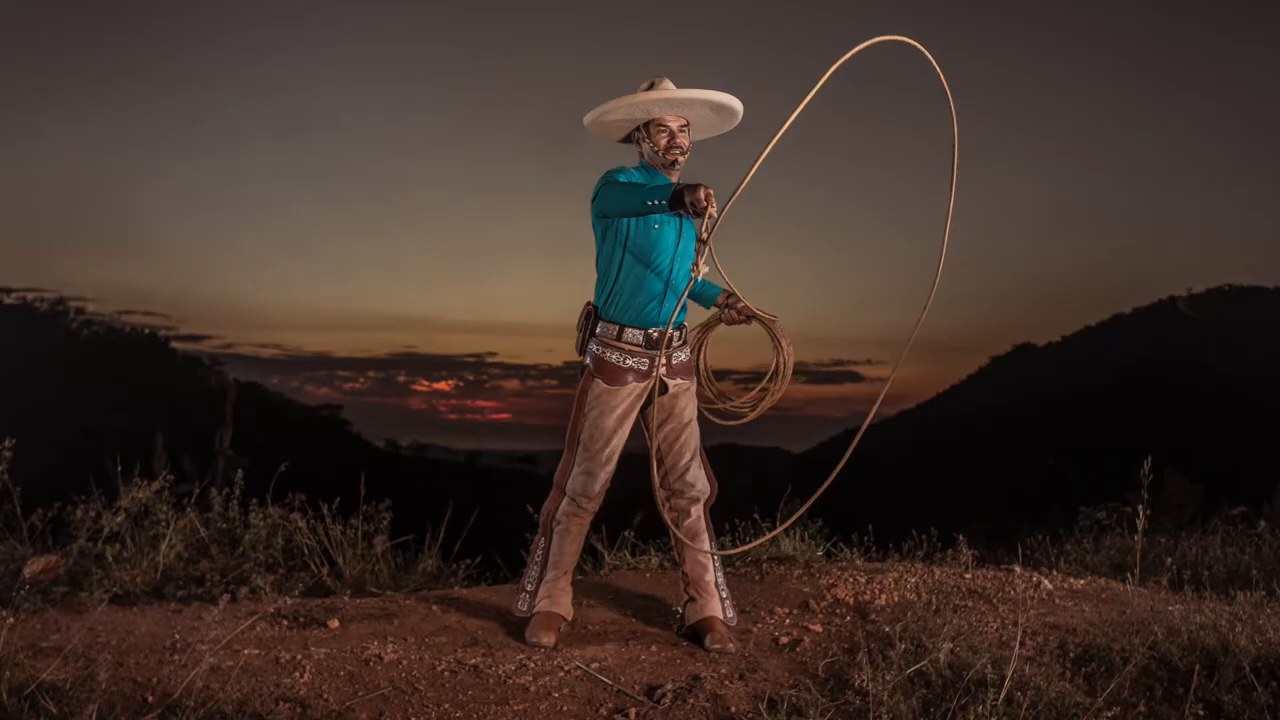
Lighting a charro at sunset
Most of this shoot used far less lighting than I normally would. For one frame on the fence, I used a single strobe and softbox camera left, with the sun as a rim and flare light. But I couldn’t get through a whole shoot without at least one complicated lighting set-up, and that came at the end of the day.
For the sunset frames we put two speedlights on either side of Alfredo, a little behind him, to cut him out from the sky. Then we added a softbox on his face, looking for an angle that was flattering but didn’t rise above the rim of his hat. I also dropped my shutter speed from 1/200 to 1/80. I wanted movement in the rope but not in his face.
Real Charros. Real Rope. Real Dust.
My prints are handmade, and that matters to me. Every time I start a new series, we look into the mythology and the history behind it, and we speak to the people and cultures involved. They come up with ideas, help draft and shape the images, and help scout locations.
It’s a whole thing, and it’s beautiful that everyone gets involved. It also comes full circle, because everyone gets paid: I pay the models for their time on the shoot and a percentage of every print sold.
That’s the opposite of typing a prompt. (I’ve put my own work up against an AI image generator before, in AI vs Artist: Can a Pro Photographer Beat Midjourney?)
From the shoot to your wall
I shoot on a professional Canon 5D4, so the files hold up at large sizes. My fine art printer in the US uses Chromogenic printing, a process similar to the classic darkroom method, which gives the images a richness and depth that suits my style. Every print is made on premium Fuji Lustre paper or 100% cotton canvas and is guaranteed not to fade for over 75 years.
See the rest of the series in my Charro prints, or browse the full fine art print collection.
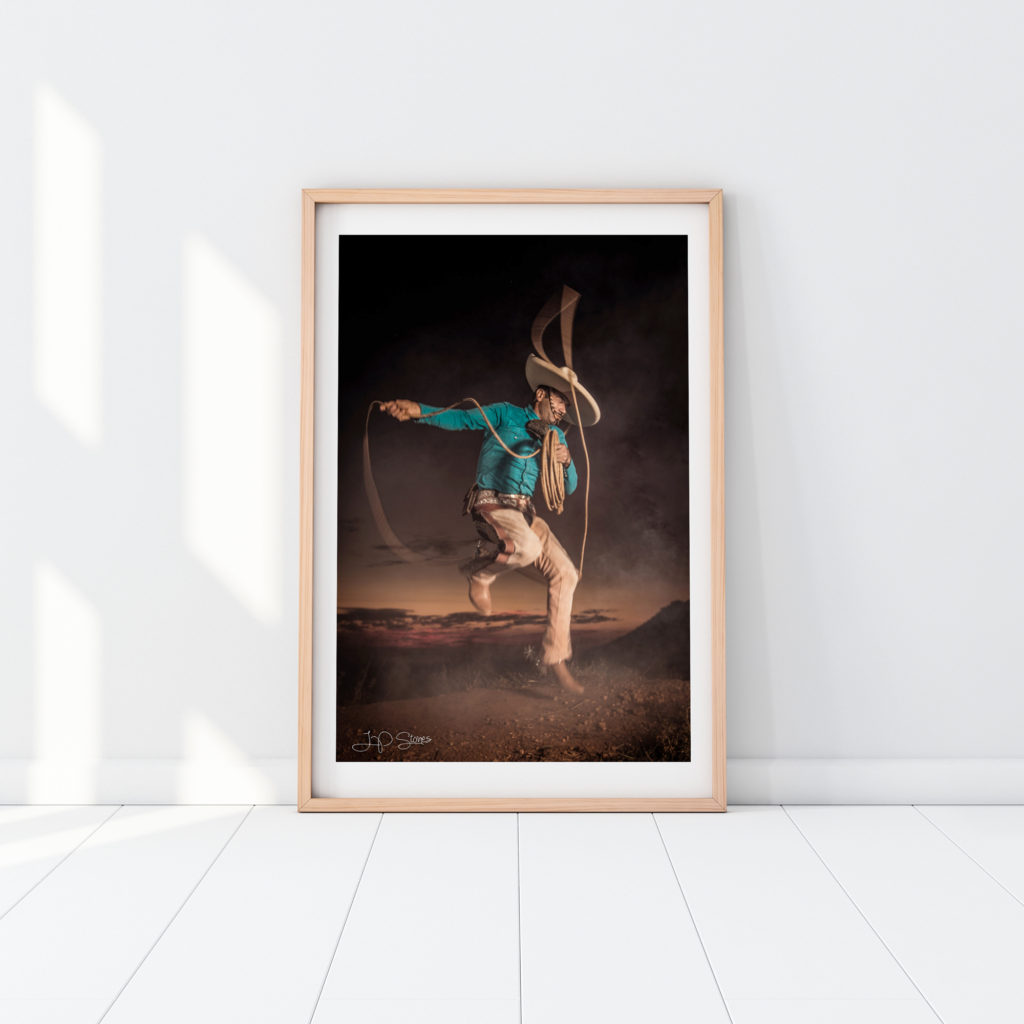
Charro #1
A real charro and his lasso in the charro country around Compostela, Mexico.
Sizes: 12×18, 16×24, 20×30, 24×36 and 30×45 inches
Price: $75 to $250, on Fuji Lustre paper or 100% cotton canvas (print only, frame not included)
Where was it shot?
In Compostela, a small Mexican town in the foothills of the Sierra Madre mountains.
Is the model paid?
Yes, and he’s far more than a model. This is a community project. The charro in these photos is a working charro, part of the community that keeps charrería alive, and he helped shape the concept behind the shoot, lending his knowledge of the horse, the rope and the tradition. He’s paid for his time on set and receives a cut of every print sold.